


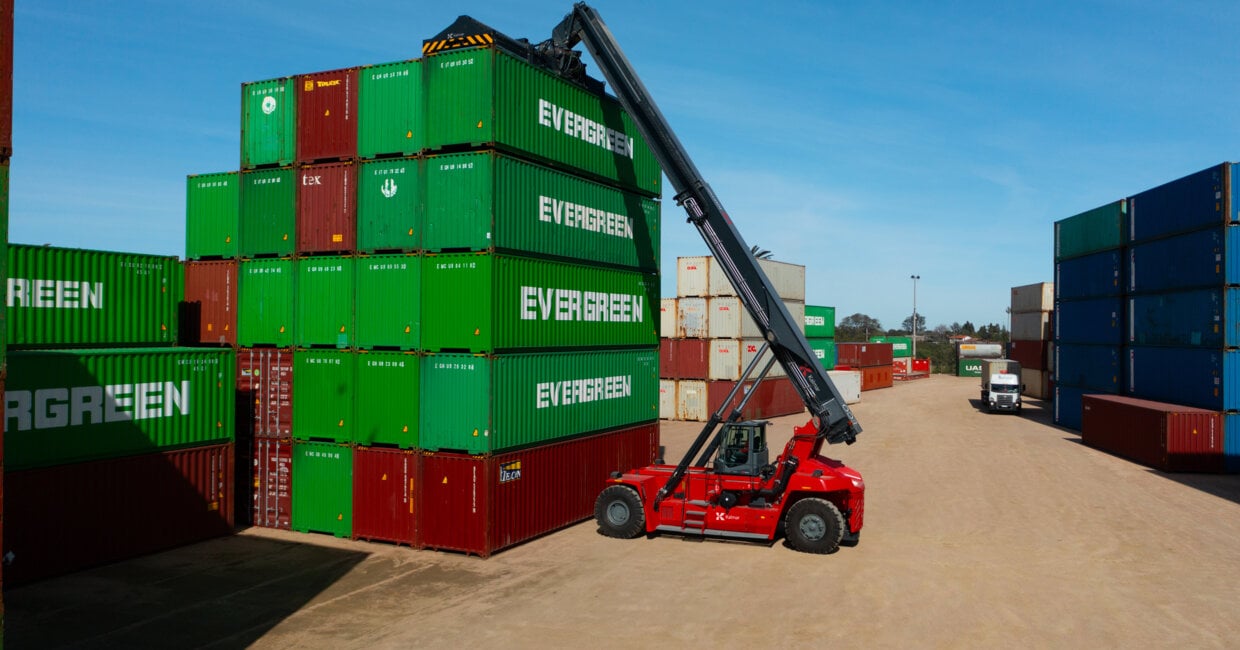
6 ways to get more from your Kalmar Eco Reachstacker
Getting more from your Eco Reachstacker does not necessarily require a major investment or a complete change to your operation.
Often, the biggest gains come from combining smarter machine settings with better operational visibility, proactive maintenance and more efficient driving habits.
With fuel costs rising and carbon emission requirements becoming increasingly demanding, container terminals are looking for practical ways to make their operations more efficient and sustainable. The challenge is doing so without disrupting the workflows that keep terminals moving.
What if you could reduce fuel consumption, lower emissions and extend the life of your heavy handling equipment, without compromising productivity?
For operations that are not quite ready to make the switch to a fully electric fleet, the Kalmar Eco Reachstacker offers a practical step towards more sustainable and cost efficient container handling. It can use up to 20% less fuel, helping to reduce both operating costs and carbon emissions without requiring major infrastructure changes or changes to established workflows.
The machine itself is only part of the equation. The right features, settings and operator habits can help you get even more from your reachstacker.
Here are six practical ways to improve efficiency, reduce unnecessary fuel use and get more from your Kalmar Eco Reachstacker.
1. Set a speed limit to work smarter
More speed does not always mean more productivity. If operators regularly travel faster than necessary, this can increase fuel consumption and put additional strain on tyres and other components and compromise safety. The Drive Speed Limitation system allows you to set a maximum speed that keeps the machine operating at an appropriate level for the task.
The result is a more controlled operation that can help reduce fuel consumption, minimise component wear and support safer, more consistent driving, while still keeping containers moving efficiently.
Pro tip: Set speed limits according to the working environment and the task at hand, rather than simply allowing the machine to operate at maximum speed.
2. Keep tyre pressure in check
Tyre pressure might seem like a small detail, but it can have a significant impact on operating costs.
Under-inflated tyres increase rolling resistance, meaning the machine needs more energy to move. They can also wear more quickly, increasing maintenance costs and potentially shortening tyre life.
With Bluetooth tyre pressure sensors, operators can monitor tyre pressure directly from the cab display and identify pressure loss before it becomes a bigger problem.
Maintaining the correct tyre pressure can help reduce rolling resistance, limit unnecessary wear and potentially extend tyre life by 10% to 40%.
Pro tip: Real time monitoring gives operators the information they need when it matters. Do not wait for a scheduled tyre inspection to discover a pressure problem.
3. Eliminate unnecessary idling with Engine Auto Start/Stop
An idling reachstacker is not moving containers, but it is still using fuel. Long periods of unnecessary idling also generate avoidable emissions and contribute to engine wear.
The optional Engine Auto Start/Stop function helps address this by automatically switching the engine off when the machine is idling and restarting it when the operator needs to move again. It is a simple way to eliminate wasted running time and can reduce fuel consumption by up to 10%.
Pro tip: Auto Start/Stop can be particularly useful in operations where machines regularly experience short pauses between tasks. Let the system manage the stop and start cycle so operators can focus on the job.
4. Match machine power to the job with Eco Drive Modes
Not every container handling task requires maximum power. The Eco Drive Mode settings give operators three different performance levels, making it easier to match the machine's power output to the task.
- Power Mode: Provides maximum engine response and lifting performance when handling heavy loads.
- Normal Mode: Offers a balanced combination of performance and efficiency for everyday container handling.
- Eco Mode: Optimises power output for lighter handling tasks and can reduce fuel consumption by up to 15% to 20%.
Using the right mode for the job means you are not using more power than you need.
Pro tip: Make Eco Mode the natural choice for lighter tasks and reserve Power Mode for situations where the additional performance is genuinely required.
5. Turn real time data into savings with MyKalmar Insight
It is difficult to improve fuel efficiency if you do not know where fuel is being used. MyKalmar Insight turns fleet telematics into clear, actionable information, giving you a better understanding of how your equipment is being used and where there may be opportunities to improve efficiency.
You can use the data to:
- Spot unnecessary idling: Identify machines that are spending too much time running without performing productive work.
- Optimise terminal routes: Analyse driving patterns and identify opportunities for smoother and more efficient movements around the terminal.
- Plan proactive maintenance: Identify maintenance needs before they develop into more serious and potentially costly issues.
- Track eco driving performance: Monitor machine use and encourage more fuel efficient driving habits across the team.
- Improve safety. Identify areas with shocks and overloads to potentially identify potholes to be repaired and limit wear and tear of machines
Pro tip: Data is most valuable when you act on it. Use the insights to start conversations with operators, maintenance teams and managers about where small changes could lead to measurable savings.
6. Give your operators the skills to drive efficiently
Even the most fuel efficient machine depends on the person behind the wheel. Smooth acceleration, avoiding unnecessary idling and choosing the right driving technique can all make a difference to fuel consumption, component wear and productivity. That is where Kalmar Eco Driving Training can help.
Available at Kalmar training centres, at your own site or through e learning, the course focuses on helping operators develop practical and more efficient driving habits.
By encouraging smoother handling and techniques that avoid unnecessary acceleration and idling, the training can help reduce driver stress, improve terminal safety and cut fuel consumption by up to 10% to 15%.
Pro tip: Make eco driving part of your everyday operating culture rather than treating it as a one off training exercise. Sharing performance data and best practices regularly can help turn efficient driving into a lasting habit.
By making full use of the Eco Reachstacker's capabilities and giving operators the right tools and training, you can reduce unnecessary fuel consumption, minimise wear and tear and keep your equipment working efficiently for longer.
Related articles
Further reading
Subscribe and receive updates in your email
Abonnieren